Anna Wintour Steps Down as Editor-in-Chief of Vogue US, But Her Power Remains Intact
After nearly four decades defining the look, voice, and culture of Vogue, Dame Anna Wintour has officially stepped down from her post as editor-in-chief of Vogue US. Her departure marks the end of an era in fashion journalism. Yet, while she relinquishes the reins of one of the industry’s most coveted positions, Wintour’s influence remains far from diminished. She continues in her dual role as Chief Content Officer of Condé Nast and Global Editorial Director of Vogue, effectively overseeing the magazine’s global network and maintaining her signature grip on the evolution of fashion media.
Wintour’s transition reflects a larger shift within Condé Nast. The company has chosen not to replace her with another traditional editor-in-chief. Instead, a new “Head of Editorial Content” will be appointed to manage the daily editorial direction of Vogue US, reporting directly to Wintour. In her own words, Wintour has expressed a desire to mentor the next generation of visionary editors, guiding them as they forge their own paths in an industry she helped redefine.
Her departure from Vogue US does not mean stepping away from influence, it is simply a pivot. As the guiding force behind the Met Gala, the CFDA/Vogue Fashion Fund, and major initiatives such as Vogue World, Wintour has transformed from an editor to a full-fledged cultural strategist. These endeavors have only deepened her visibility beyond the printed page, turning her into a global icon of not just style, but authority.
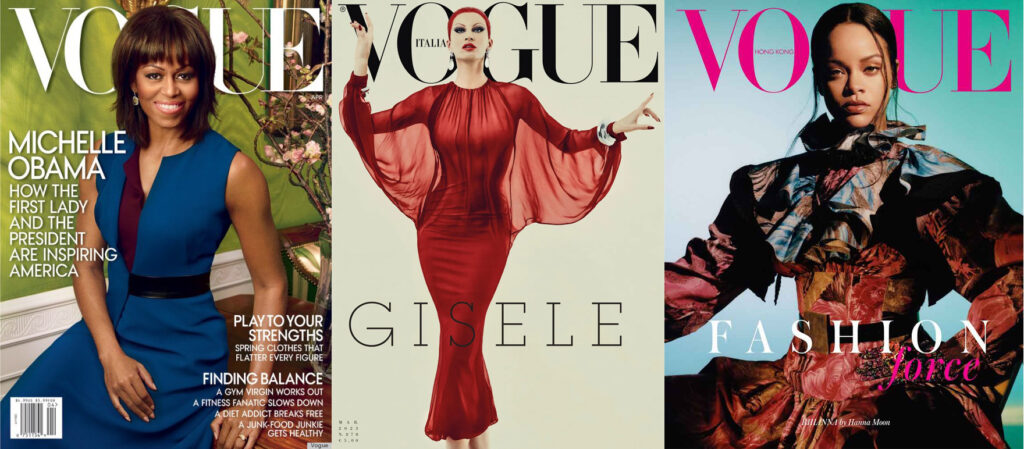
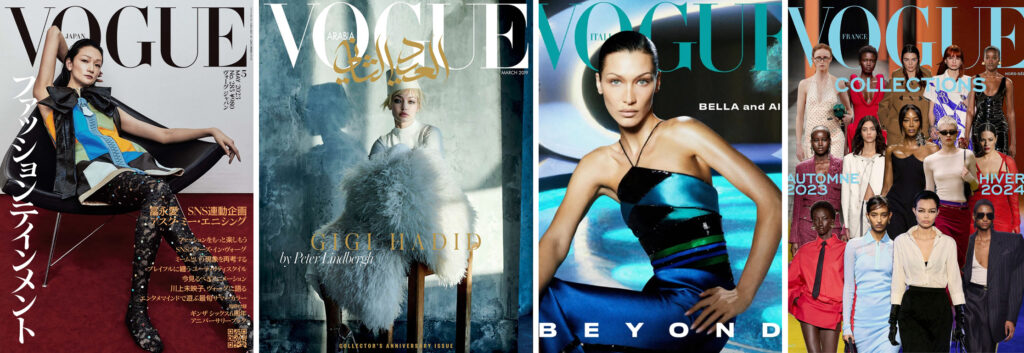
Her legacy, built across nearly four decades, is unparalleled. From her very first cover . . . an unorthodox image of Michaela Bercu in a Lacroix jacket and jeans . . . Wintour challenged the visual codes of fashion publishing. She saw where culture was going long before the world did. Under her leadership, Vogue was no longer a pedestal for unattainable beauty, but a reflection of cultural zeitgeist: political, diverse, and modern. She ushered in a new era that blended celebrity and fashion seamlessly, placing women like Michelle Obama, Serena Williams, and Rihanna on the cover, alongside traditional supermodels like Naomi Campbell, Gisele Bündchen, and Bella Hadid.
But her reign wasn’t without critique. Known internally for her exacting standards and ironclad editorial control, Wintour was often described as icy and intimidating. She was epitomized in pop culture by Meryl Streep’s portrayal of Miranda Priestly in The Devil Wears Prada. Still, for those in the fashion world, her exactitude was seen as the cost of excellence. She could make or break careers with a single decision. And she often did. Designers like Alexander McQueen, John Galliano, and Phoebe Philo were among those whose trajectories were shaped, in part, by her early support. The same is true for emerging talents like Telfar Clemens and Joseph Altuzarra, whom she championed through programs like the CFDA/Vogue Fashion Fund.
Among her most defining achievements is the transformation of the Met Gala. What was once a relatively quiet fundraiser for the Costume Institute has, under Wintour’s stewardship, become the most talked-about event in fashion. She curated every element, from guest lists and seating arrangements to themes and red carpet strategy. Critics argued that her growing focus on the spectacle of the Gala sometimes eclipsed the editorial depth of Vogue itself, but few could deny the reach and relevance the event brought to the brand. Wintour didn’t just edit a magazine, she built a global fashion empire rooted in precision, hierarchy, and performance.
Her influence, of course, extended beyond the U.S. In 2013, she became Condé Nast’s Artistic Director and later its Chief Content Officer, overseeing all Vogue editions worldwide. While she did not personally edit every issue, her strategic oversight shaped visual tone, cover selection, and key editorial decisions across dozens of countries. Her impact is visible on the pages of Vogue Italia, Vogue Paris, Vogue Japan, Vogue Arabia, and beyond.
As she transitions out of the U.S. editor-in-chief role, Vogue is already shifting. According to new reports, the brand is recalibrating its leadership structure, appointing new regional heads and diversifying its content strategies. What remains unchanged, however, is Anna Wintour’s voice at the top. She will continue to define the global standard for fashion journalism and media aesthetics, only now with a broader canvas.
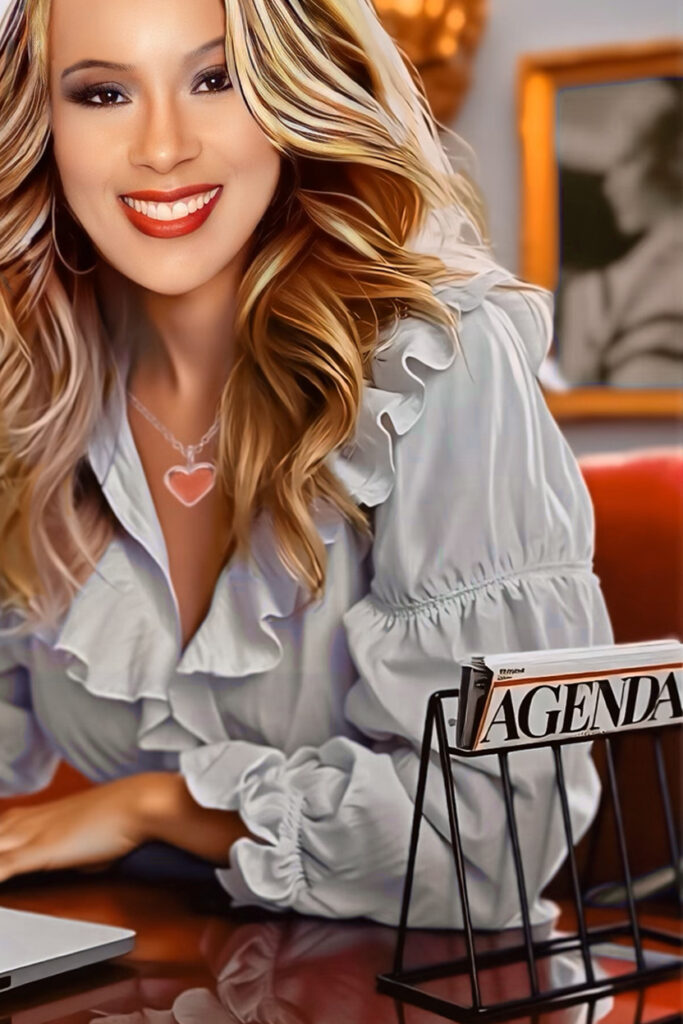
Reflecting on this moment as a former model and now editor-in-chief myself, I can’t help but acknowledge how deeply Wintour’s presence shaped my path. As a teenager thumbing through the pages of Vogue, I dreamed of being one of the women who wore those clothes, walked those runways, and lived that life. I later became a runway model and ultimately built my own magazines, including AGENDA. That fire to lead, to shape narratives and elevate untold voices, was lit by Anna’s work. She was my blueprint. Her departure from Vogue US is not just a news story—it’s personal. It’s the closing of a chapter that influenced an entire generation of editors, designers, stylists, and visionaries.
Kaylene Peoples: AGENDA’s Founder, Editor in Chief, Senior Fashion Editor, and owner of KL Publishing Group (Photo Credit: First Take PR Photography)
What comes next for Vogue remains to be seen. But one thing is certain: Anna Wintour may have stepped down, but she hasn’t stepped back. Her name still echoes across mastheads and red carpets alike—and likely will for decades to come.
As the fashion world braces for its next chapter, Wintour’s departure leaves an unmistakable void, but also invites reflection. In the forthcoming Special Edition 4 of AGENDA Magazine, titled “AGE OF POWER,” I explore her legacy in my Fashion Talk column with a deep retrospective on the most iconic editor-in-chief in fashion history. From her visionary ascent to her calculated mystique, and the undeniable imprint she left on media and style culture, this collector’s issue is both tribute and examination.
The issue itself is the brainchild of Shahada Karim, AGENDA’s Beauty Editor, Editor-in-Chief of Habibi Life, and a respected wellness and yoga expert. Her sharp editorial eye and holistic perspective help shape AGE OF POWER into a bold conversation on influence, image, and the women who define both.