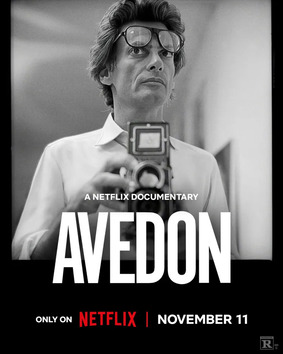
 I thought I knew Richard Avedon. I was wrong. Having studied his extraordinary photographs and his influence on fashion and portraiture, I expected to encounter an exacting, perhaps intimidating artist whose perfectionism had helped redefine modern photography. Instead, Ron Howard’s magnificent documentary Avedon introduced me to a warm, humorous, deeply intuitive man whose fascination with human individuality was as compelling as the images he created. I began watching as an admirer of his work and finished feeling that I had met the man himself.
As filmmaking, Avedon is exceptional. Beautifully photographed by Robert Chappell, the documentary employs muted backgrounds, delicate green undertones, and an extraordinarily shallow depth of field to create an intimate, sophisticated visual atmosphere. Andrew Morreale’s impeccable editing brings Avedon’s photographs to life through dynamic movement, rapid transitions, and precisely placed voiceovers. David Fleming’s original score complements the imagery, while thoughtfully selected sourced music evokes earlier periods without resorting to predictable nostalgia. The sound production, archival integration, and overall art direction are equally impressive. Few documentaries achieve this level of visual and technical refinement while remaining so thoroughly engaging.
What fascinated me most, however, was Avedon’s understanding of the human face. While photographing military personnel early in his career, he recognized that no two faces were alike. Like fingerprints, each possessed its own identity. That realization helped shape an artistic philosophy in which beauty was not confined to conventional attractiveness but could emerge through character, vulnerability, age, and imperfection.
His account of photographing Marilyn Monroe was particularly revealing. After hours of laughter, conversation, drinks, and a shared meal, Avedon sensed that the carefully maintained public persona had finally given way to something more authentic. He recognized the moment instinctively and captured a vulnerable Marilyn in approximately ten minutes. He understood that maintaining a façade required tremendous effort and that, occasionally, a person stopped performing and simply existed. His genius was recognizing that transformation.
Equally fascinating was his recollection of presenting Christian Dior with a beautiful photograph of a woman crying on a subway. Dior rejected the image because his fashion house was selling happiness, confidence, and aspiration. The encounter illuminated the tension between artistic expression and commercial expectations, a tension Avedon navigated while creating some of fashion photography’s most exuberant images.
The documentary also explores his influence on racial inclusion in fashion, with recollections from celebrated models and personalities including Twiggy, Beverly Johnson, and Isabella Rossellini. Their accounts reveal an artist who could be demanding and perfectionistic while remaining profoundly engaged with the people he photographed.
My most personal revelation came when Avedon discussed how his sister’s face had shaped his perception of feminine beauty. I immediately recognized the experience. My own mother, an extraordinarily beautiful woman, became my earliest aesthetic reference. Remarkably, Avedon’s sister even shared her facial type. It reminded me that beauty is not merely something we observe; it is also something we associate with affection, familiarity, and emotional memory.
Howard’s documentary also reveals Avedon as a devoted family man who could laugh at his own difficult temperament, admitting that he was a pain in the ass, as artists often are. That humor and self-awareness made him unexpectedly endearing.
The Filmmakers Behind Avedon. (L–R) Producers Dallas Brennan Rexer and Sara Bernstein, director and producer Ron Howard, and producers Justin Wilkes and Christopher St. John attend the Avedon photocall during the 79th Cannes Film Festival at the Palais des Festivals in Cannes, France, May 17, 2026.
Produced by Brian Grazer, Ron Howard, Dallas Brennan Rexer, Sara Bernstein, Christopher St. John, and Justin Wilkes, Avedon demonstrates the extraordinary possibilities of collaborative filmmaking. Special recognition is due to its sound and music teams, whose contributions are essential to the film’s remarkable atmosphere.
I expected a portrait of photographic greatness. What I discovered was a celebration of human individuality, artistic intuition, and the beautiful complexity of the man behind the camera. Richard Avedon spent his career looking past the faces people presented to the world. How fitting that this extraordinary documentary should allow us to look past his own.
★★★★★ 5 out of 5 Stars
Awarded for its exceptional flow, compelling storytelling, and striking visuals.