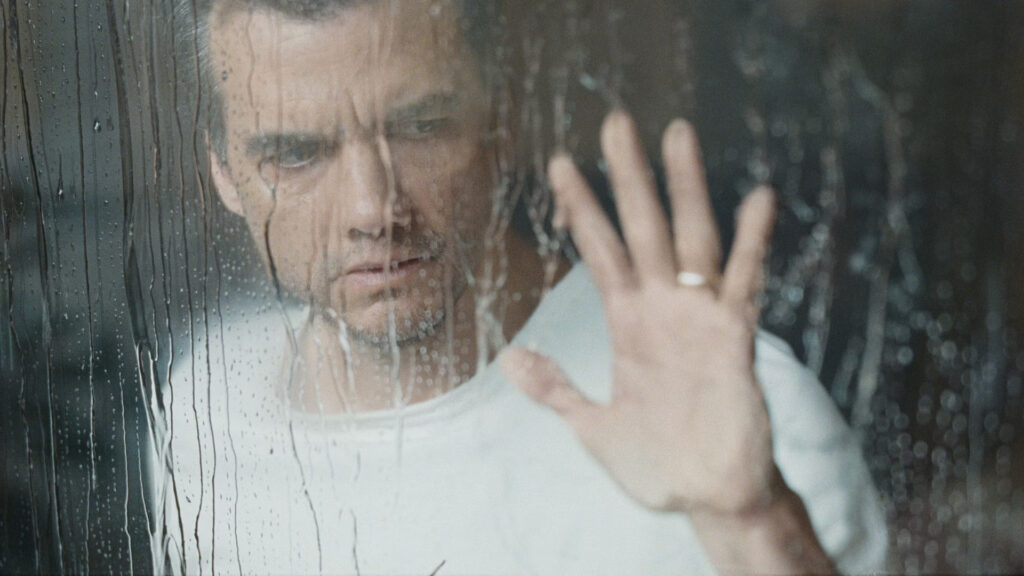
“The Last House challenges the idea of a safe haven, turning a family home into a hostile environment where survival demands unity.”— Louis Leterrier, Director, Netflix Tudum
One of the most fascinating aspects of The Last House is watching ordinary household items take on entirely new purposes as the family adjusts to circumstances no one could have anticipated. Their home gradually transforms from a familiar domestic space into an elaborate survival system, and the passage of time is reflected not only in the characters but in the environment surrounding them. Possessions are repurposed, routines change, resources become increasingly precious, and the house itself seems to evolve alongside its inhabitants. Halfway through the film, however, something else happens: the suspense evolves into pure horror. At that point, I had to watch to the end. For all its deliberately slow pacing, the movie succeeds in creating enough uncertainty about what is really happening outside those walls to keep you invested in finding out where it is going.
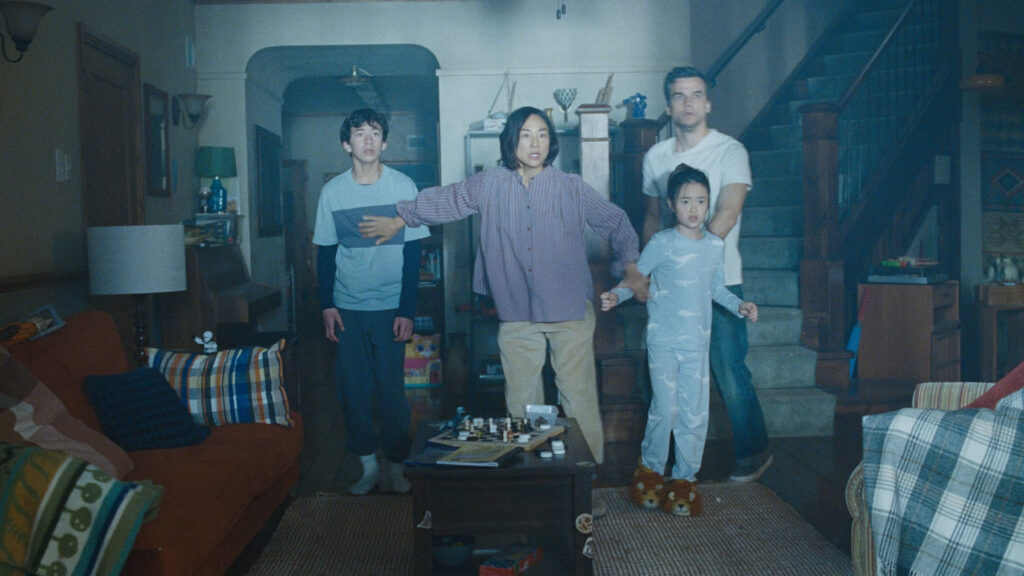
“The Delgados’ struggle against this new, horrifying reality is anything but ordinary.”
— Aimee Hart, Polygon, Meta Critic
The score is perfect, lending just the right amount of suspense and creating those hair-standing-up-on-the-back-of-your-neck moments. Elements of Bernard Herrmann and Jaws came to mind many times. The music never overwhelms the action, but it knows exactly when to make its presence felt, adding another layer of uneasiness to an already claustrophobic environment. There is also a moral to this story, but instead of spoiling the ending, I’ll let you see it for yourself and come to your own epiphany. The acting is good throughout, but perhaps the most incredible feature of The Last House is the house itself, along with the cinematography and the utter realism of the chaos. As the years pass and the environment deteriorates, the production design makes the family’s predicament increasingly believable. You feel like you are there with them, watching a place that was once simply a home become something entirely different.
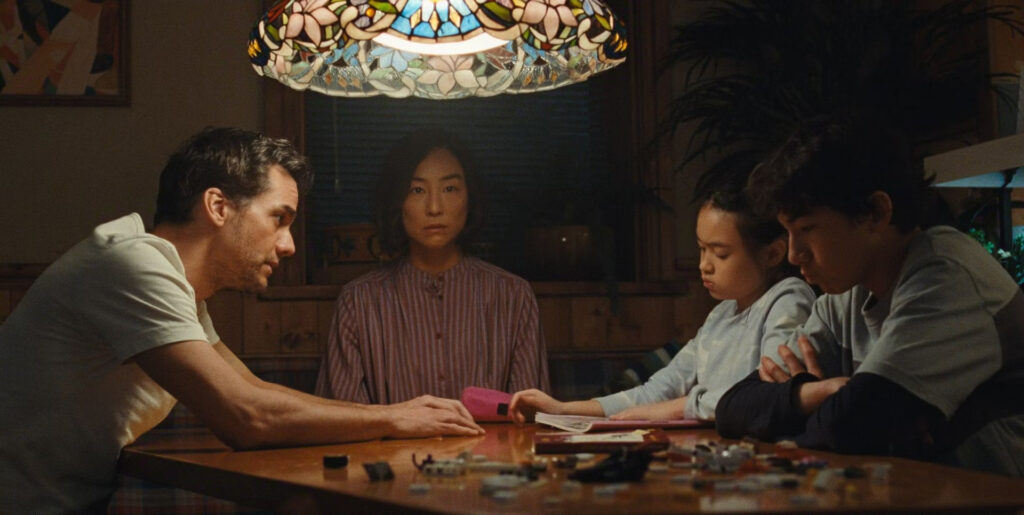
“It just never feels like the stakes are high enough.”
— Brian Tallerico, RogerEbert.com, Roger Ebert
For everything The Last House does well, the pacing keeps it from earning that fifth star. It is simply too slow-moving and takes too long to get to the real action, and there is too much left unexplained in the plot. Still, the film succeeds where it matters most: once you become invested in this family and their increasingly desperate circumstances, you want to know what happens. By the time the slow-burning suspense finally gives way to horror, turning away is no longer an option. The Last House is ultimately less about aliens, isolation, or even the mystery surrounding the family’s confinement than it is about adaptation, ingenuity, and what people discover they are capable of when everything familiar is stripped away.
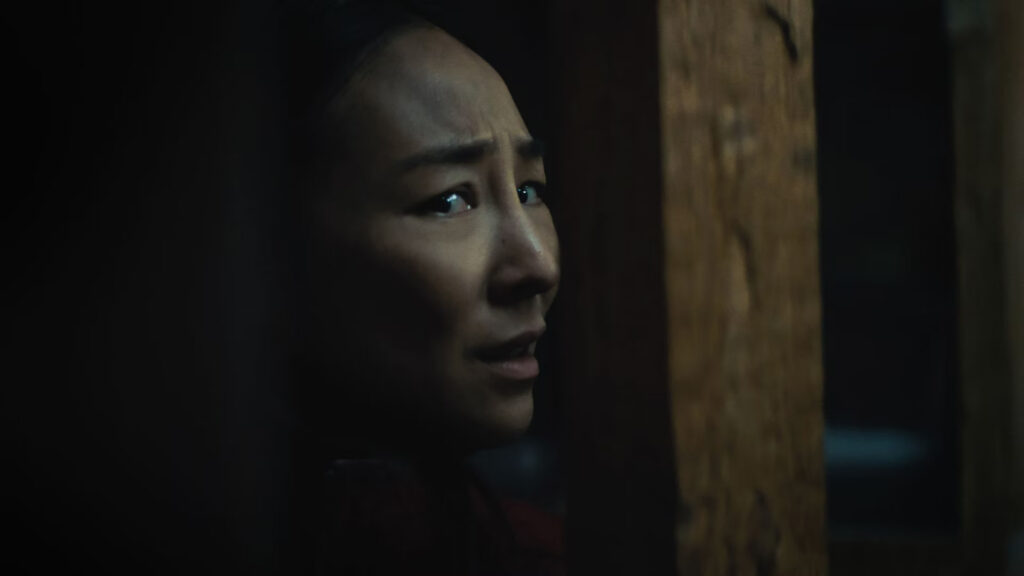
★★★★☆ — 4 Stars
The Last House is directed by Louis Leterrier from a screenplay by Matthew Robinson and stars Greta Lee as Ann and Wagner Moura as Jason, with Riley Chung and Emma Ho portraying Ruth at different ages, Noah Alexander Sosnowski and Gabriel Barbosa as Graham at different ages, and Arden Cho as the adult Ruth. The film’s cinematography is by Pål Ulvik Rokseth, production design is by Kevin Jenkins, and the score is composed by Yair Elazar Glotman.