For much of modern publishing history, a relatively small collection of institutions determined which stories deserved attention, which personalities merited recognition, and which publications possessed the authority to influence public opinion. Their judgments were reinforced by circulation figures, advertising revenues, distribution agreements, and the prestige associated with established names. They did not merely report on culture. They participated in deciding what culture would become. To be featured in the right magazine was to acquire a particular kind of legitimacy, and to be ignored by that magazine could mean remaining invisible, regardless of one’s accomplishments.
But an uncomfortable question has emerged in the digital era: Who gave these institutions exclusive authority in the first place?
The answer, of course, is that nobody did. Authority was accumulated through investment, reputation, access, and the willingness of audiences to accept certain publications as arbiters of taste. Some earned that standing through extraordinary journalism and editorial innovation. Others inherited influence through corporate consolidation, commercial relationships, and the enormous advantages that accompany established distribution. Over time, the distinction between excellence and institutional recognition became increasingly blurred. A prestigious name could confer credibility before a reader encountered a single sentence, while an unfamiliar publication might be dismissed before its first page was opened.
The arrangement was convenient for those who benefited from it. It was considerably less convenient for everyone else.
THE MYTH OF PERMISSION
The mythology of traditional media rests on a seductive proposition: that cultural authority must be bestowed from above. A publication becomes important when another important publication acknowledges it. A writer becomes consequential when an established editor approves the work. A creative enterprise becomes legitimate when it receives attention from institutions already regarded as legitimate. This circular system has sustained reputations, launched careers, and preserved hierarchies for generations.
Yet the proposition contains an obvious contradiction. Every established publication was once new. Every celebrated editor was once unknown. Every institution that now commands respect began with individuals who believed they had something worth saying before the world agreed with them.
Somewhere along the way, the publishing establishment began confusing its own longevity with an exclusive right to determine cultural value.
The internet disrupted that assumption, although not quite in the way its early enthusiasts predicted. Digital publishing did not eliminate gatekeeping. It redistributed it. Search engines, social media platforms, recommendation systems, and digital marketplaces introduced new mechanisms through which visibility could be granted, restricted, or amplified. The power to reach an audience became more widely available, but the competition for attention intensified. The old gatekeepers did not disappear. They acquired technological counterparts.
And still, something fundamental changed.
A publisher no longer needs to persuade a traditional media institution to acknowledge a new magazine before placing that magazine before the public. A writer can establish a readership without securing a prestigious byline. A photographer can attract international attention without waiting for a fashion editor to approve a portfolio. These possibilities do not guarantee success, nor do they make editorial standards irrelevant. They simply expose a truth that was always present: permission and merit are not the same thing.
THE DIFFERENCE BETWEEN BEING SEEN AND BEING ANOINTED
Consider the peculiar relationship between cultural achievement and media recognition. An extraordinary photograph can exist for decades before attracting widespread attention. A musician can produce exceptional recordings without becoming a household name. A magazine can publish thoughtful, beautifully designed work without receiving the institutional acknowledgment traditionally associated with publishing prestige.
Does recognition create the achievement, or does it merely make the achievement easier to discover?
The distinction matters because the modern media economy has become remarkably skilled at treating visibility as a substitute for substance. Popularity is measured in impressions, influence in followers, and cultural relevance in the speed with which a subject circulates through digital platforms. Yet none of these measurements can independently establish whether something is worth reading, hearing, seeing, or remembering.
Salvador Dalí
The same skepticism should apply to institutional prestige. A respected masthead may indicate a history of editorial accomplishment, but it cannot guarantee the quality of every article beneath it. Conversely, the absence of a famous masthead tells us remarkably little about the intelligence, originality, or cultural significance of the work itself.
The reader, not the institution, must ultimately make that judgment.
This is not an argument against editorial authority. Serious editing, research, fact-checking, and informed criticism remain essential. It is an argument against confusing authority with exclusivity. The capacity to recognize important work should never be mistaken for ownership of the right to produce it.
A CASE STUDY IN CULTURAL VISIBILITY
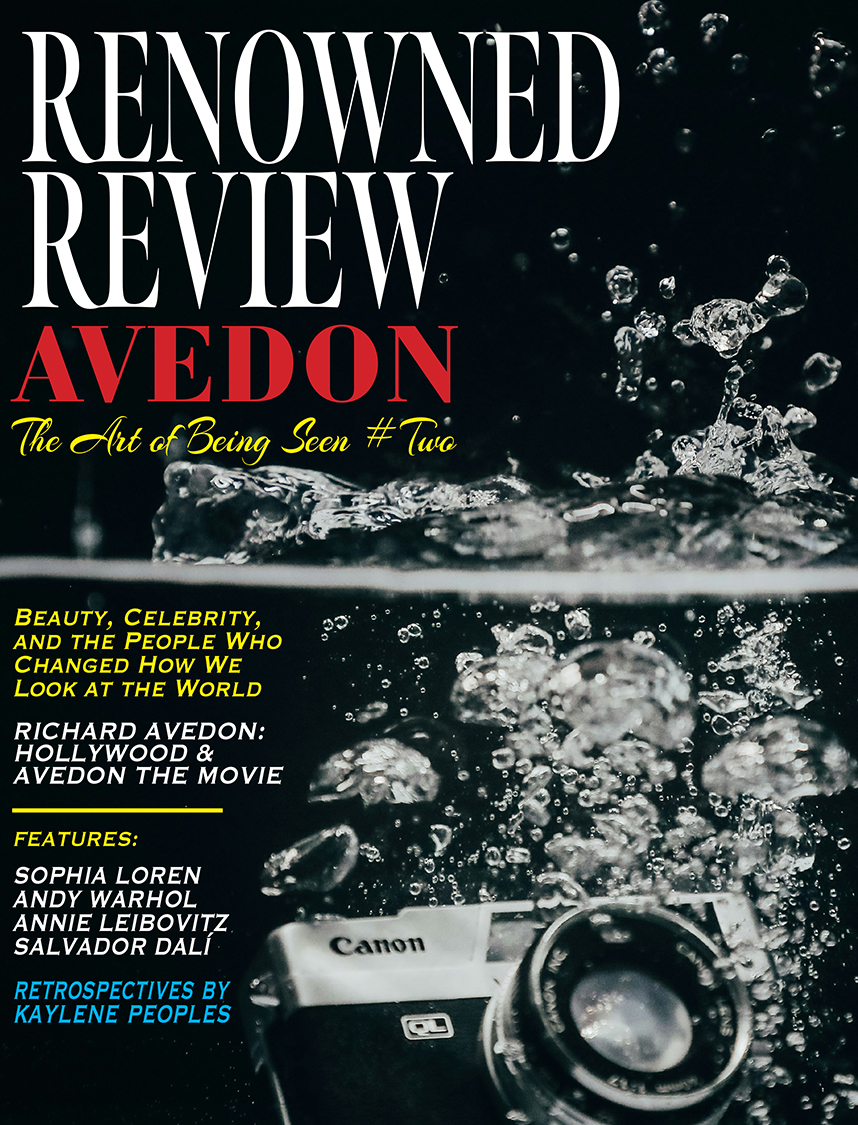
The recent publication of RENOWNED REVIEW‘s second issue offers a useful illustration of how the relationship between publishing and visibility continues to evolve. Titled “The Art of Being Seen: Beauty, Celebrity, and the People Who Changed How We Look at the World,” the 91-page magazine examines Richard Avedon alongside Sophia Loren, Andy Warhol, Annie Leibovitz, and Salvador Dalí. Its release coincides with renewed public interest in Avedon through Ron Howard’s Netflix documentary and the exhibition Richard Avedon: Hollywood at Gagosian in Beverly Hills.
Annie Liebovitz
The editorial premise is straightforward: the individuals who shaped modern visual culture deserve to be examined in relation to one another, rather than confined to isolated biographies or fleeting anniversary coverage. But the publication’s arrival also raises a larger question about how contemporary cultural journalism enters public conversation.
Within hours of its press announcement, RENOWNED REVIEW appeared in Google News search results for Richard Avedon alongside coverage from Air Mail, The New York Times, and Vogue. The appearance was the result of press release distribution, not an editorial endorsement from those publications. That distinction is important. Search visibility is not the same as journalistic validation, and appearing in the same results does not establish equivalent editorial standing.
But that is precisely why the example is revealing.
A search engine can place material from institutions of vastly different sizes before the same reader, allowing the reader to decide which source warrants attention. The result does not erase differences in reputation, reporting resources, or editorial practice. It does, however, demonstrate that access to discovery is no longer exclusively controlled by the traditional publishing hierarchy.
For a publishing company such as KL Publishing Group, which produces AGENDA, RENOWNED REVIEW, THE PERFORMING ARTIST, and other specialized titles, the significance is practical rather than ceremonial. The company can publish, distribute, and introduce its work to potential readers through an infrastructure that does not depend entirely on invitations from established media organizations.
That is not a declaration of superiority over traditional publishing. It is a demonstration of an alternative route to the audience.
And alternatives have always made established institutions nervous.
THE EXHIBITION BEGINS BEFORE THE PURCHASE
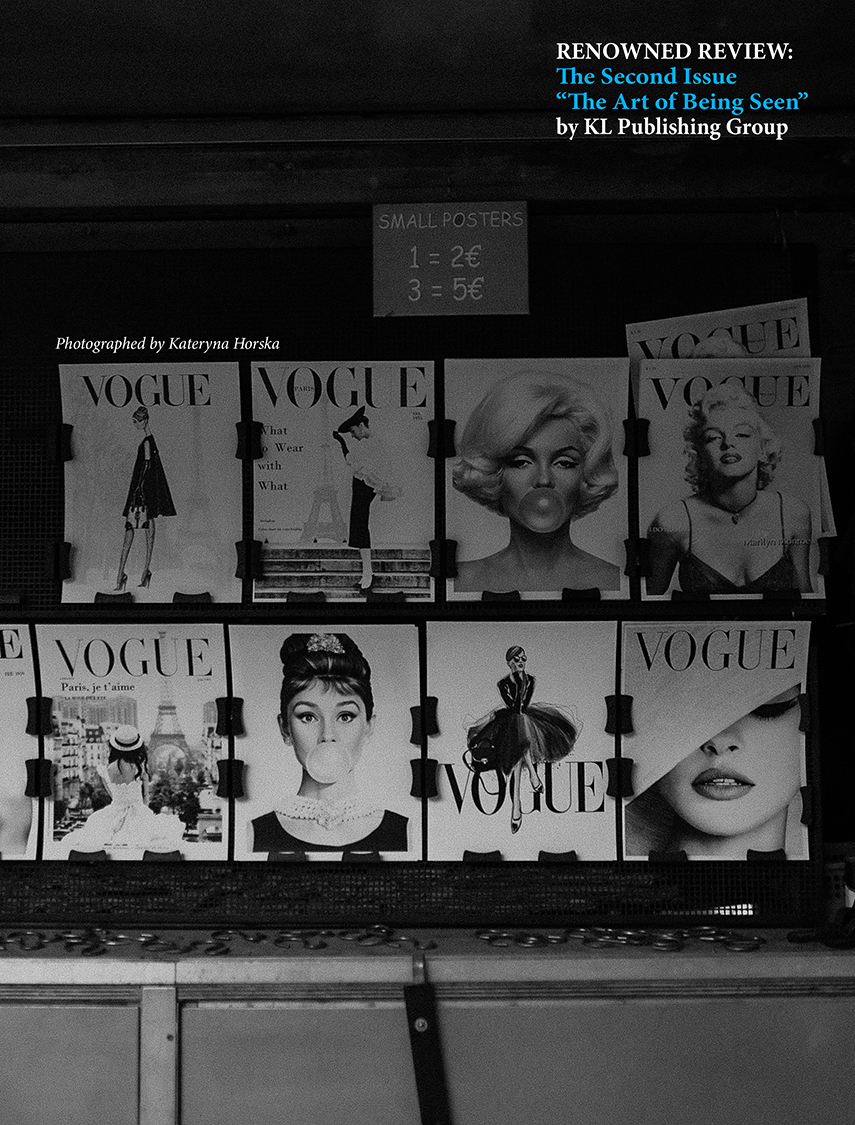
There is another dimension to this changing relationship between publishers and readers, one that becomes apparent when visiting the Amazon listing for RENOWNED REVIEW, Issue No. 2. Its “Look Inside” feature offers considerably more than a conventional sneak peek: 23 pages of engaging backstories, beginning with Richard Avedon, Annie Leibovitz, and Andy Warhol. Rather than relying exclusively on promotional descriptions or the prestige of its subjects, the publication allows prospective readers to encounter its editorial substance firsthand. The opening pages establish the magazine’s visual character, introduce the personalities who helped shape modern culture, and provide a meaningful sample of the historical storytelling awaiting readers inside.
Richard Avedon
There is something almost audacious about this approach. The reader becomes the critic, free to examine the work without waiting for an established institution to pronounce judgment. Turning those pages is rather like entering a carefully curated exhibition, where each image invites closer inspection and every backstory adds another dimension to a familiar cultural figure. The preview establishes the atmosphere, but the full experience remains ahead. And perhaps that is the most compelling invitation a publication can extend: not simply to admire the cover or recognize the famous names, but to walk through those memorable moments, discover the people behind them, and decide for oneself whether the journey deserves to continue.
THE POWER OF LEAVING READERS WANTING MORE
For AGENDA, the principle of offering readers a compelling introduction to a larger editorial experience is hardly new. For years, the magazine’s popular column Fashion Talk, now expanded into its own publication, served as precisely that kind of invitation. Its fashion retrospectives offered more than attractive photographs or familiar designer names. They explored the personalities, creative decisions, and cultural histories behind the clothes, giving readers an opportunity to discover something unexpected about subjects they thought they already knew. Reader responses repeatedly affirmed the appeal of those retrospectives and the desire to explore the stories further. What began as a recurring editorial feature eventually developed into a publication with an identity of its own.
Sophia Loren
That same sensibility is evident in the first two issues of RENOWNED REVIEW. The inaugural edition, featuring celebrity stylist Ty-Ron Mayes, introduced readers to the creative intelligence and personalities behind the presentation of fashion and celebrity. The second issue expands that curiosity through Richard Avedon, Annie Leibovitz, Andy Warhol, and other cultural figures whose work continues to invite examination. The subjects may differ, but the editorial philosophy remains consistent: offer readers enough substance to awaken their curiosity, then reward that curiosity with a richer experience. The Amazon “Look Inside” preview becomes an extension of a publishing approach that AGENDA has cultivated for years. The opening pages are not merely samples. They are invitations to continue discovering, questioning, and remembering. The most effective teaser does not withhold everything. It reveals just enough to make the reader realize how much more there is to discover.
PRESTIGE IS NOT A BUSINESS MODEL
There is another uncomfortable truth that the publishing industry seldom discusses with sufficient candor: prestige and commercial viability are not interchangeable.
An admired publication can struggle financially. A highly specialized magazine can attract a modest but devoted audience and operate successfully within its chosen market. A cultural institution can command extraordinary name recognition while confronting declining readership or changing advertising economics. None of these circumstances can be adequately explained by the familiar division between important publications and supposedly lesser ones.
The economics of publishing are more complicated than the reputations attached to its participants.
Digital distribution has made those complications impossible to ignore. Readers increasingly encounter journalism through search results, social media, newsletters, direct subscriptions, and online marketplaces rather than through a single established publication. Their loyalty may belong to a subject, an individual writer, or a particular editorial perspective instead of a corporate media brand.
For publishers willing to build direct relationships with readers, this creates possibilities that earlier generations could scarcely have imagined. It also imposes responsibilities. The ability to publish without traditional institutional approval does not excuse weak reporting, careless attribution, misleading claims, or poor editorial judgment. Greater access to the public should encourage higher standards, not lower ones.
Freedom from an old gatekeeper is only valuable if the work produced is worth encountering.

WHO OWNS CULTURAL MEMORY?
Perhaps the most consequential aspect of this transformation concerns the historical record itself.
The stories that survive are not necessarily the stories that mattered most. They are often the stories that someone had the resources, determination, and opportunity to preserve. Photographs become iconic because they are reproduced. Careers become historically significant because they are documented. Creative achievements enter the public consciousness because someone considered them worthy of attention.
This is one reason the work of Richard Avedon remains so relevant. His photographs did not simply record famous faces. They helped establish the visual language through which generations came to understand celebrity, fashion, personality, and public identity. The magazines that published his work were participants in that process, shaping cultural memory through editorial selection and presentation.
But what happens when the authority to preserve cultural memory becomes more widely distributed?
The possibilities are considerable. Specialized publications can document artists overlooked by mainstream media. Editors can devote substantial space to subjects that do not fit the commercial priorities of larger organizations. Publishers can preserve interviews, photographs, performances, and creative histories that might otherwise disappear into private collections or forgotten archives.
This does not mean every publication will produce work of historical importance. It means the opportunity to attempt it no longer belongs to a select few.
The historical record becomes richer when more qualified voices contribute to its preservation.
THE GATES WERE NEVER THE DESTINATION
Traditional media institutions still possess considerable influence, and many continue to produce journalism of exceptional quality. Their contributions should be judged on their merits, just as the work of newer and smaller publishers should be. The objective is not to replace one hierarchy with another or pretend that reputation, experience, and resources have no value.
The objective is to recognize that cultural significance cannot be permanently assigned by institutional decree.
A publisher does not need to defeat an established magazine to produce a worthwhile publication. A journalist does not need to discredit a famous newspaper to conduct meaningful reporting. A creative enterprise does not need to imitate a media conglomerate to establish its own identity.
What matters is whether the work reaches an audience, fulfills its editorial purpose, and contributes something of substance to the public conversation.
The publishing establishment may continue to guard its prestige. It is entitled to do so. Prestige, after all, is one of the few commodities that becomes more valuable when others believe it is difficult to obtain.
But cultural relevance is another matter entirely.
It cannot be permanently inherited, purchased, or bestowed by a committee. It must be demonstrated, repeatedly, through the work itself.
The gates were never the destination. They were simply one way of getting there.
And the most interesting publishers are no longer waiting for someone to hand them the keys.
AGENDA is published by KL Publishing Group. Its latest release, RENOWNED REVIEW, Issue No. 2, examines Richard Avedon and the creative figures who transformed modern visual culture. Available internationally through Amazon. For publication information, visit KL Publishing Group.