Fashion editorials are designed to appear effortless. The reader sees the model, the wardrobe, the location, the styling, the photography, and ultimately the finished story. What remains largely invisible is the amount of work required to make those elements come together successfully.
Even after more than two decades of publishing fashion editorials, AGENDA Editor-in-Chief Kaylene Peoples admits that she was largely accustomed to experiencing them the same way readers do: as finished work.
“I can’t tell you how many times I have looked through fashion editorials only to toss them aside for more interesting subject matter.”
“If one catches my attention, I may read where the clothes came from, who styled it, and whether the model is famous enough for her or his name to even be mentioned in the spread.”
Her favorite publications range from VOGUE to Marie Claire, and her attention is often captured by the same things that attract any discerning fashion reader: the model, styling, wardrobe, style of shooting, location, and, lastly, the story.
“I have been known to stare at a makeup technique and even admire the beauty of the subject,” she admits. “And yes, I am still guilty of this.”
For Peoples, however, the relationship with fashion imagery has long extended far beyond that of a reader. As the founder and Editor-in-Chief of AGENDA, the fashion glossy published by KL Publishing Group, she has witnessed countless runway shows, directed and creatively consulted on fashion shoots, and spent more than two decades receiving and publishing editorials produced by photographers, stylists, creative directors, models, and beauty teams.
More recently, she began producing her own shoots for Kaylene Peoples Fashion Talk, another KL Publishing Group title. A former professional model herself, Peoples suddenly found her past and present occupations colliding.
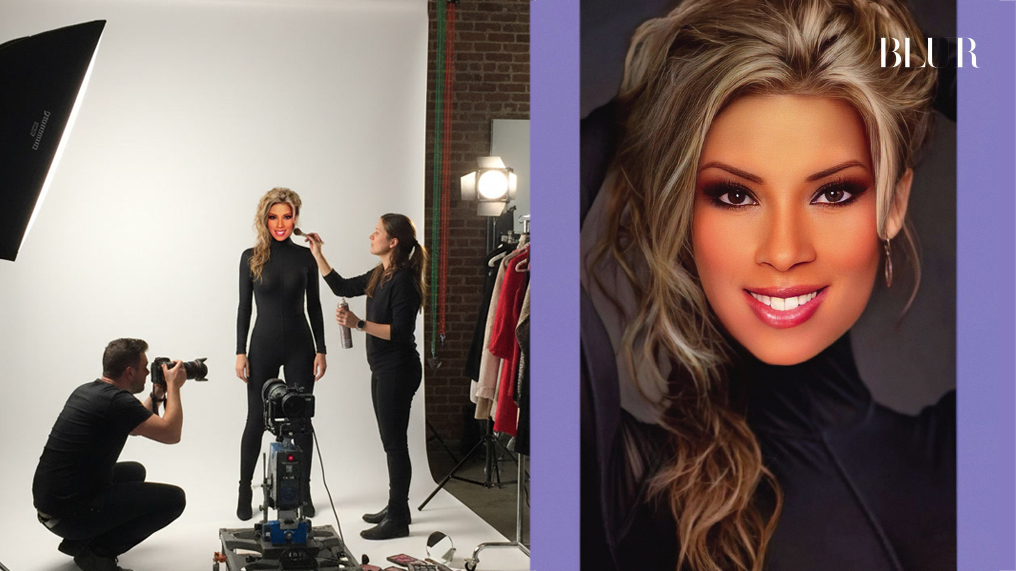
“Mind you, I used to be a model,” she says. “I have a dusty portfolio and zed card that are so outdated, I am unrecognizable.”
The industry surrounding that old portfolio has changed considerably. Fashion has expanded its definition of who belongs in front of the camera, with age no longer carrying the restrictions it once did.
“As an all-grown-up woman, times have certainly changed,” Peoples says. “You don’t have to be 16 years old to walk the runway or be featured in a fashion campaign. Thank goodness we have evolved.”
Then came BLUR Magazine Issue #289.
The British fashion publication asked Peoples to appear on its cover and supply the accompanying fashion editorial. Her first thought was logistical.
“Would I have to fly to Great Britain to shoot this?”
She would not. Instead, BLUR asked Peoples to deliver the editorial herself.
“Wow. That was a first.”
The assignment presented an interesting reversal. Peoples had spent decades evaluating finished fashion stories. Now she would be responsible for constructing one from the beginning, while simultaneously serving as its subject.
“Sometimes I forget my reputation,” she says. “I forget I run several publications, the main one being AGENDA—the only fashion glossy KL Publishing Group publishes. And I have been around!”
Her experience told her what a successful editorial looked like. Producing one from the ground up, however, revealed something different.
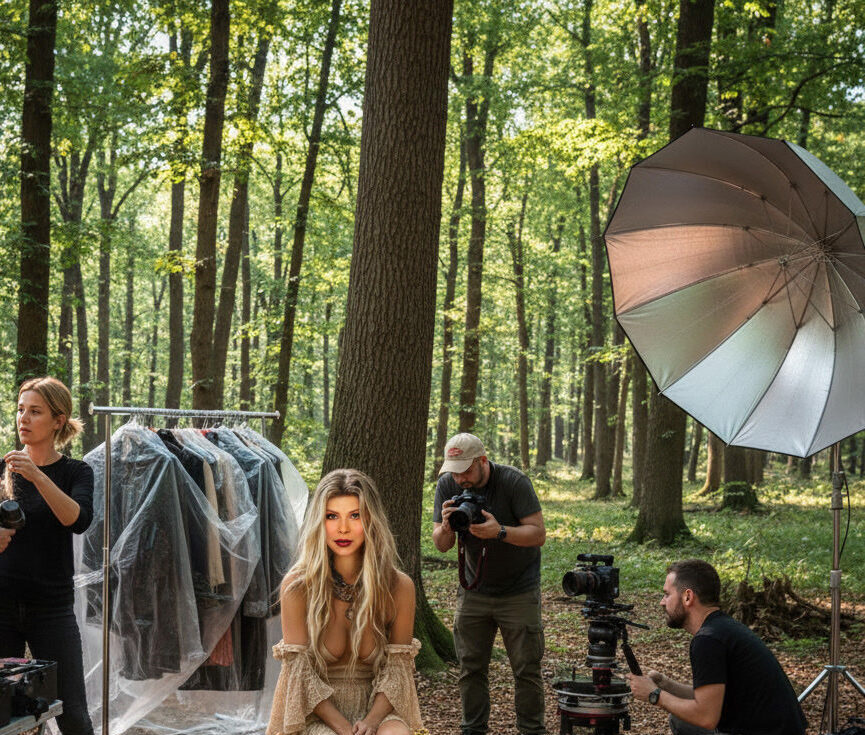
A finished fashion photograph rarely reveals everything that happened before the shutter clicked: concept development, wardrobe, styling, hair and makeup, locations, lighting, equipment, scheduling, production logistics, and the coordination of the creative professionals responsible for bringing those individual elements together.
Then comes editing.
Peoples already knew that part intimately. A beautiful photograph is not necessarily the right photograph. Each image must contribute something to the larger story, and a successful sequence requires enough visual range to maintain the reader’s interest without losing cohesion.
What surprised her was the magnitude of everything that had already happened before an editorial traditionally reached her desk.
For more than two decades, Peoples had largely enjoyed the luxury of receiving the finished product. Editorials arrived beautifully photographed, styled, organized, and ready for publication. In the rarest cases, she might perform minor finishing work to bring the imagery closer to AGENDA’s aesthetic.
The difficult work had already been done.
“I had been seeing the result for twenty years.
I had never really seen the labor.”
That realization prompted a conversation with longtime AGENDA collaborator and fashion editor Ty-Ron Mayes. Peoples confessed that she had never fully appreciated the scope of what occurred before the polished editorials she had published for years reached her.
It was not that she didn’t understand fashion imagery. Her career required her to recognize what worked, what didn’t, and what belonged in the pages of a luxury fashion magazine. What she hadn’t experienced to this extent was being responsible for manufacturing the entire visual story herself.
The experience gave her a new appreciation for the photographers, stylists, creative directors, hair and makeup artists, models, assistants, and production teams whose work has populated AGENDA’s fashion pages.
By the time their photographs reached her, they had already solved problems she never needed to see.
Behind the Scenes — Studio Production
BLUR #289 introduced an additional complication: Peoples was both the creative director and subject of her own editorial.
Those responsibilities normally operate from opposite sides of the camera.
As creative director, Peoples needed to monitor wardrobe, location, hair and makeup, lighting, composition, visual variety, and whether the production was generating enough material to construct a complete fashion story.
As the subject, she had to stand inside the photograph.
She could not simultaneously occupy the frame and stand outside it evaluating what the camera was seeing.
The dual role also forced another distinction familiar to fashion editors but considerably more difficult when the editor is looking at herself:
“Do I like this photograph of myself?
And is this a successful fashion photograph?”
They are not the same question.
A photograph can flatter its subject beautifully while contributing little to the larger editorial. Conversely, an image that might not be the subject’s preferred portrait can provide precisely what the fashion story needs.
For an editor accustomed to making that distinction when evaluating other people, applying the same dispassionate judgment to herself presented an entirely different challenge.
Behind the Scenes — Location Production
Behind the Scenes — Building the Story
Peoples approached the BLUR assignment as she would an editorial intended for AGENDA.
“I wanted range,” she says. “I wanted the images to feel connected without looking repetitive, and I wanted each setting and look to contribute something different.”
BLUR requested six photographs, and Peoples’ original six-image selection already included the photograph of her holding AGENDA’s AGE OF POWER collector’s edition.
Then she reconsidered the practical side of the submission. If BLUR had allocated a specific number of pages to the editorial but ultimately decided it did not want another fashion magazine prominently featured within its own pages, rejecting the AGE OF POWER image would leave the editors one photograph short.
Peoples therefore added a seventh image as insurance: a drastically different photograph showing her in a casual, oversized sweater, leaning against a brick wall and smiling warmly. It gave BLUR a completely different visual option if the magazine image did not make the cut.
BLUR used all seven.
The completed editorial represented something more significant than a successful collection of photographs. For the first time, Peoples had experienced the process she had spent decades encountering primarily at its endpoint.
“And to my surprise,” Peoples says, “I did it.”
Once she delivered the photographs, another reversal occurred.
The editor became the subject.
BLUR became the editor.
Its team determined how the submitted photographs would be presented in its pages and ultimately selected the image that would become the cover of Issue #289.
For someone accustomed to making those decisions for other people’s work, seeing another publication interpret hers offered a rare view from the opposite side of the page.
Not every successful image from the production became part of the submission.
Among the finished photographs Peoples considered was an image that ultimately remained behind. There was nothing inherently wrong with it. It simply did not contribute enough to the final story to earn its place among the selected photographs.
That is another part of fashion editorial production readers rarely encounter.
A shoot may generate numerous successful photographs, alternate concepts, variations, and individually compelling frames. The editor’s responsibility is not to publish every beautiful photograph. It is to determine which photographs create the strongest story together.
An Image That Did Not Make the Final Submission
“A beautiful photograph is not necessarily the right photograph,” Peoples says.
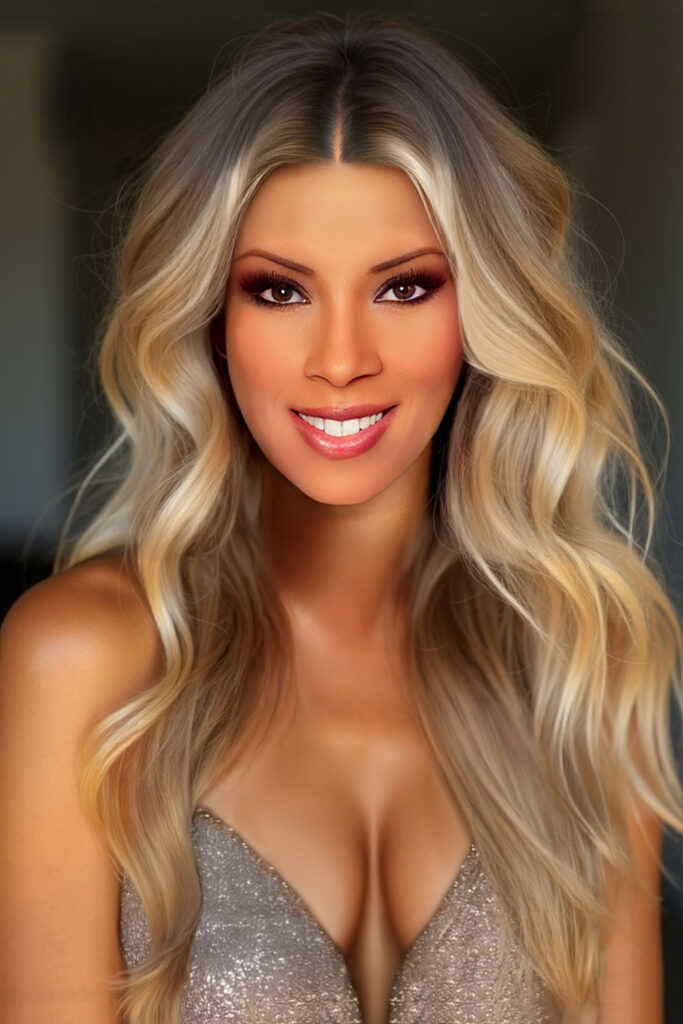
Sometimes a strong image repeats something another photograph already accomplishes more effectively. Sometimes it interrupts the visual rhythm. Sometimes it simply belongs to another story.
The photographs that disappear can be as revealing of the editorial process as those that remain.
What follows is the complete seven-image fashion editorial submitted for BLUR Magazine Issue #289, accompanied by a look at the production behind it.
These are the polished images readers ultimately see after the preparation, logistics, creative decisions, collaboration, problem-solving, and editing have disappeared from view.
For more than two decades, AGENDA has published fashion stories created by talented teams who made that work appear effortless.
This time, its Editor-in-Chief had to experience the process herself.
And now she understands.
“The Art of Being” Fashion editorial featured in BLUR Magazine Issue #289.
By First Take PR Photography